







Becoming America: how science shaped a nation
The Science Museum in London has announced a significant new exhibition which will reveal how science and technology shaped the land, peoples and identity as the United States of America came into existence.
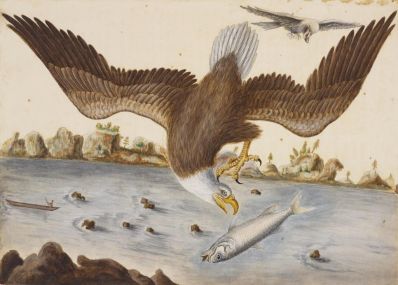 The Bald Eagle, Mark Catesby, 1722-26 © Royal Collection Enterprises Limited 2026 | Royal Collection Trust
Becoming America: How Science Shaped a Nation will open at the Science Museum in London in October to mark 250 years since the signing of the Declaration of Independence and the founding of the United States.
A rare surviving copy of the Declaration, notable items used by King George III and George Washington, and a pioneering map made by Benjamin Franklin will be among over a hundred objects on display in an exhibition created with the support of the Library of Congress.
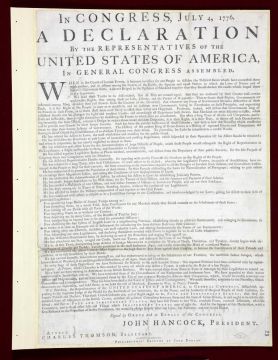 Rare copy of the US Declaration of Independence, 1776, courtesy of the National Archives
The exhibition will examine interwoven stories of how Anglo-American colonists, enslaved and free people of African descent, and Indigenous Americans used their knowledge, skills and tools to live, cultivate the land and exert power. Through remarkable maps, stunning paintings and scientific instruments and artefacts, Becoming America will chart four decisive decades in the history of North America: beginning in the 1760s, when Britain took over territorial control from France, through the founding of the United States to the first US presidency in 1790s.
Visitors will encounter King George III and George Washington, representative figures of power in Britain and America, through stories about their keen personal interest in science and technology. For example, both leaders were inspired by and engaged in agricultural innovations, with documents demonstrating how they introduced innovations to crop rotation in their respective farms at Windsor and Mount Vernon, a system which benefitted landowners on each side of the Atlantic.
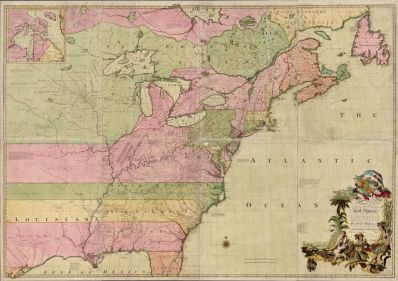 A map of the British and French dominions in North America, John Mitchell, 1755, courtesy of the Library of Congress
Sir Ian Blatchford, Director and Chief Executive of the Science Museum Group, said: “This major exhibition will provide a surprising and alternative exploration of the founding of the United States in this 250th anniversary year, examining how science and technology shaped this nation, its people and the land at a pivotal moment in history. I have no doubt the exhibition’s unexpected stories will surprise our visitors and add greater depth to the shared history between our nations.”
An illustration of a now familiar icon of the United States, which became the national emblem in 1782, will also be on display. Owned by King George III, this watercolour illustration by English naturalist Mark Catesby depicts a bald eagle dramatically plunging towards a fish, its spread wings stretched across the width of the picture. The image is from what is considered the first published book to survey American flora and fauna, which was printed between 1729 and 1747, and also had a place in George Washington’s library.
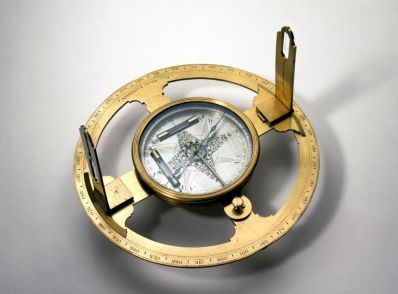 Surveyor’s compass believed to have been used in the Mason Dixon Line survey © Science Museum Group
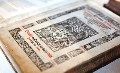
The exhibition will culminate with visitors able to closely examine a document that established the United States. On display will be a rare surviving Dunlap print of the Declaration of Independence, printed in 1776, the year the historic Declaration was written and signed. The Declaration was influenced by European scientific and philosophical thinking, and this official printed copy features the printer’s name, John Dunlap.
Slightly longer than a sheet of A4 paper and mostly written by Thomas Jefferson, the Declaration’s contents continue to reverberate to this day, with memorable passages such as: ‘We hold these Truths to be self-evident, that all Men are created equal [...] with certain unalienable Rights, that among these are Life, Liberty, and the Pursuit of Happiness.’
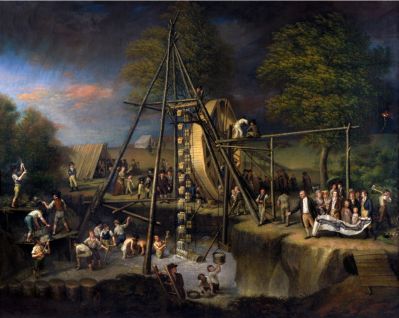 The Exhumation of the Mastodon, Charles Willson Peale, c. 1807, courtesy of the Maryland Center for History and Culture
Becoming America will also outline how science was used to help shape a national identity for the United States. On display for the first time in the UK will be a painting showing an excavation of a mastodon, an ice age relative of the elephant. Charles Willson Peale, the painter and scientist who led the excavation, went on to reassemble its skeleton in his museum in Philadelphia, one of the first public museums in the United States. Through popularising the science and history of this young nation, Peale helped nurture a national pride in its land and the scientific prowess of its people.
Becoming America: How Science Shaped a Nation will open at the Science Museum on 23 October 2026 and will run to 25 April 2027. The Science Museum is part of the Science Museum Group, the world’s leading group of science museums that share a world-class collection providing an enduring record of scientific, technological and medical achievements from across the globe.
If you or your group would like to enjoy a visit to this landmark exhibition on a tailor-made tour to London, please do contact our friendly team today.