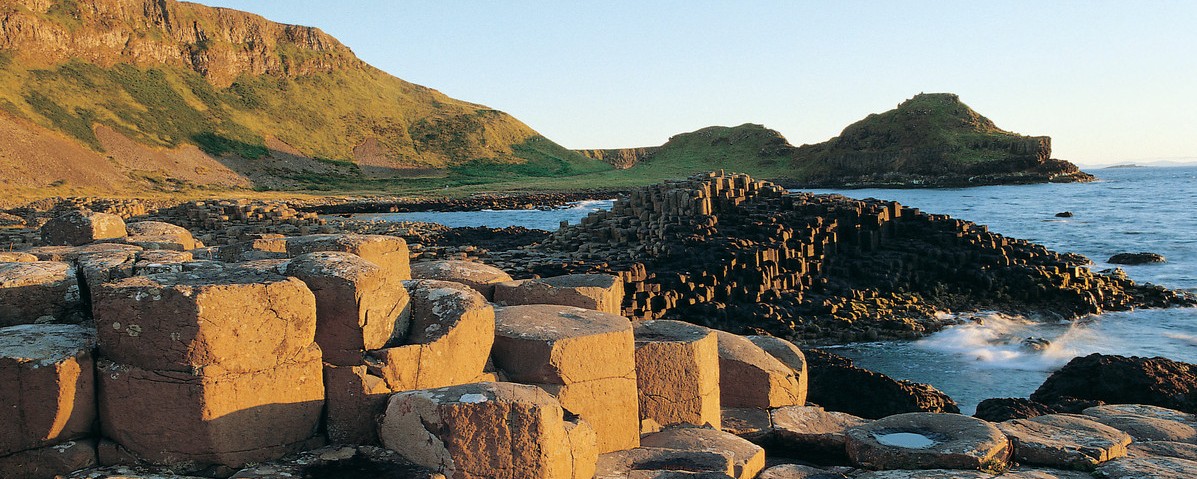
Scotland's unique UNESCO Trail
Scotland was the first country in the world to bring together its UNESCO sites into one trail. UNESCO recognises and conserves the world’s most special places, and Scotland is home to 16 of these spectacular sites, which is quite an achievement, considering the size of the country! Why not follow the UNESCO trail on your next trip to Scotland?
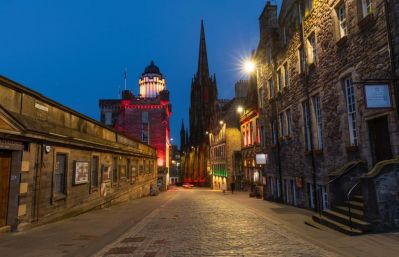 Royal Mile in Edinburgh’s Old Town © Visit Scotland / Kenny Lam
The United Nations Educational, Scientific and Cultural Organization (UNESCO) seeks to encourage the identification, protection and preservation of cultural and natural heritage around the world considered to be of outstanding value to humanity.
In Scotland, there are seven UNESCO World Heritage Sites, two Biosphere Reserves, three Global Geoparks and four Creative Cities. This is an incredible testament to the richness and scope of Scotland’s awe-inspiring nature, its ancient and compelling history, the vibrancy of its culture, and its proud scientific and technological legacy.
World Heritage Sites
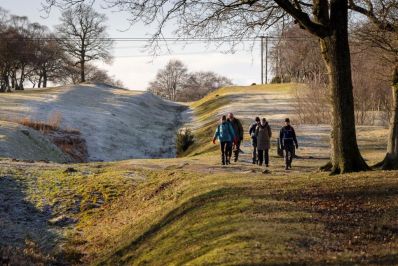 Antonine Wall at Rough Castle © Visit Scotland / Kenny Lam
Antonine Wall
Once the Roman Empire’s most northerly frontier, this ambitious engineering project, which stretched 37 miles (60km) from coast to coast, was lined by 17 forts and patrolled by 7,000 soldiers. Unlike Hadrian’s Wall which was built from stone, the Antonine Wall was composed of ramparts built from layers of turf and fronted by a wide and deep ditch to deter attackers. The best-preserved and most visible section of ditch and rampart can be found along the 5 mile (8km) stretch at Watling Lodge in Falkirk, but there are many other well-preserved sites to visit along the wall’s length.
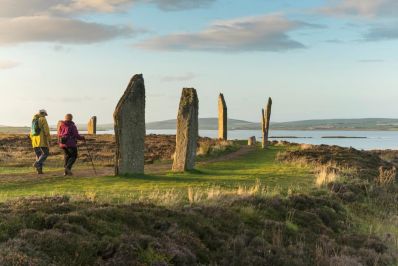 Ring of Brodgar in the heart of neolithic Orkney © Visit Scotland / Kenny Lam
Heart of Neolithic Orkney
Around 5,000 years ago, the prehistoric people of Orkney began building monuments and landmarks out of stone. These ancient sites are fascinating to explore and provide an incredible insight into the lives of the people who built them. The Heart of Neolithic Orkney brings together four key monumental sites near Stromness on the Orkney Mainland - Skara Brae, Maeshowe, the Stones of Stenness and the Ring of Brodgar – that allow visitors to step back in time and learn about the people who once lived here.
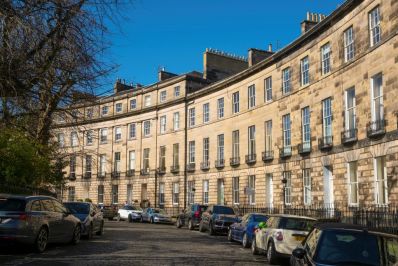 Circus Place in Edinburgh’s New Town © Visit Scotland / Kenny Lam
Old and New Towns of Edinburgh
Edinburgh is one of the world’s most beautiful cities. Its historic heart is one of the most striking and architecturally significant in the world, thanks to the dramatic contrast of its Old and New Towns. Incorporated into a landscape of crags, dips and rolling hills, Edinburgh offers a constantly changing range of perspectives. From the turreted skyline of the medieval Old Town with its towering tenements to the neat and ordered grid of the neoclassical New Town, a new discovery greets visitors at every turn.
The Flow Country
The Flow Country is a real gem in the Highlands of Scotland, and something you won’t find anywhere else in the world. Covering a breathtaking expanse of blanket bog, sheltered straths, moorland and mountain in Caithness and Sutherland, it is one of Scotland’s most important natural resources and the first and only Peatland World Heritage Site.
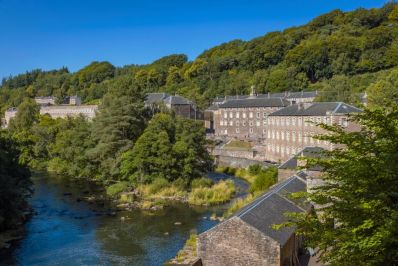 New Lanark © Visit Scotland / Kenny Lam
New Lanark
New Lanark was a mill village founded in 1785 near Glasgow in the picturesque Clyde Valley. The cotton mill was in operation for two centuries until 1968 and at one time was thought to be the largest industrial facility in the world. It became a renowned blueprint for what could be the ideal working and living environment for workers and their families, thanks to philanthropist and social reformer Robert Owen. New Lanark is an exceptionally well-preserved 18th century mill village and award-winning attraction.
St Kilda
This remote archipelago is situated 35 miles north west of North Uist in the Outer Hebrides. St Kilda is composed of five unique islands, Hirta, Dùn, Soay, Boreray and Levenish, alongside a number of towering sea stacks and islets. Here you can immerse yourself in untouched landscapes, with thrilling boat trips and an array of birdlife. Although St Kilda is now uninhabited, people once lived and thrived here, just as they did on the main Outer Hebridean islands.
 The Forth Bridge at sunset © Visit Scotland / Kenny Lam
The Forth Bridge
Recognised for its innovative design and technology all over the world, the Forth Bridge is an impressive feat of engineering. It has three distinct sections stretching across the Firth of Forth made from red steel and millions of rivets. Opened in 1890, it was the first major structure to be built from mild steel which is cost-effective, reliable and still popular today.
Biosphere Reserves
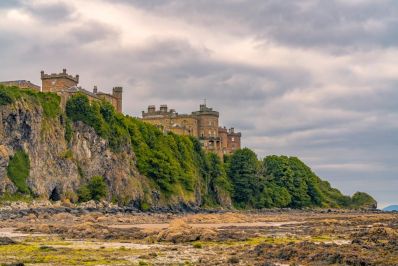 Culzean Castle on Ayrshire’s southern coast © VisitScotland / Luigi Di Pasquale
Galloway and Southern Ayrshire Biosphere
UNESCO Biosphere Reserves are ‘learning places for sustainable development’ and this was Scotland’s first, designated in 2012. The Galloway and Southern Ayrshire UNESCO Biosphere covers 3,753 square miles (9,720 sq km) of southwest Scotland’s land and sea and is full of outdoor adventure, geological wonders and fascinating history. Explore ancient broadleaf woodland, or follow the coastline, which ranges from towering cliffs with breathtaking views to long sandy beaches.
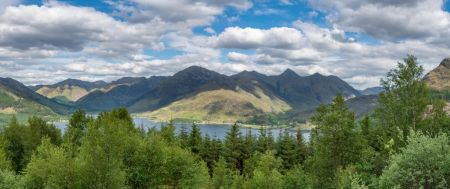 Kintail in Wester Ross Biosphere © VisitScotland / Liam Anderstrem
Wester Ross Biosphere
Discover astounding natural beauty and eco-diversity in Wester Ross. This spellbinding area in the northwest Highlands has beautiful beaches, gleaming lochs, centuries-old pinewoods, deep glens, and lofty mountains. There's an incredible array of rare wildlife here and plant species of international significance.
Global Geoparks
Shetland Geopark
A UNESCO Global Geopark is an area of outstanding geological and scientific importance and Shetland Geopark showcases a wide range of geological formations, spanning over 3 billion years of Earth's history. Learn more about rocks from different geological periods and enjoy dramatic coastal cliffs, sandy beaches and rolling hills, which create ideal habitats for a variety of wildlife and bird species as well as stunning scenery to admire. Delve into human history and visit sites like the ancient settlement of Jarlshof and various broch towers, highlighting the range of people that have lived on the islands throughout time.
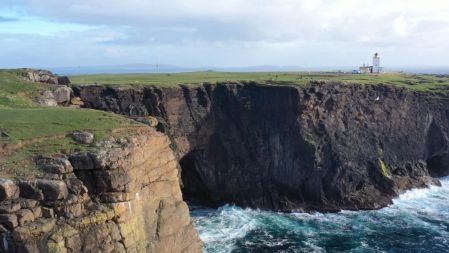 Shetland © VisitScotland / Stephen Mercer
North West Highlands Geopark
Stretching over 2,000 square kilometres in the far corner of mainland Scotland, the North West Highlands Geopark is a spectacular example of different rock geologies: at three billion years old, the Lewisian Gneiss is the oldest rock in Europe. It is also home to the earliest evidence of life to be found anywhere in Europe. But the geopark is not just about science, it’s about beauty, with white sandy beaches, rocky mountain ridges and atmospheric rock caves. Then there’s the wildlife, with evidence of creatures that once walked the earth hidden deep in caves alongside today’s seabirds, eagles and sea-life.
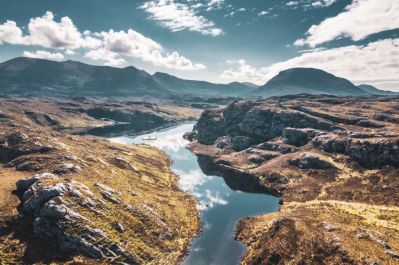 The Rock Route in the North West Highlands Geopark © VisitScotland / Liam Anderstrem
The Isle of Arran
The Isle of Arran is Scotland’s third and newest UNESCO Global Geopark. This incredible island has been shaped by continents colliding, volcanoes erupting and glaciers carving their way through the landscape. It’s home to a huge variety of biodiversity, wildlife and archaeological remains and now holds international recognition as one of the world’s most important geological places.
Creative Cities
Dundee: UNESCO Creative City of Design
UNESCO’s Creative Cities showcase and bring light to cities who have had creativity play a major role in their growth, from music and literature to design and craft. The story of Dundee is defined by amazing inventions and ideas – design is a big part of everyday life in this Scottish city. Once renowned throughout the world for its textile and shipbuilding industries, Dundee has transformed into a cutting-edge centre of design. It’s now an important hub for medical research, fashion, journalism and video games.
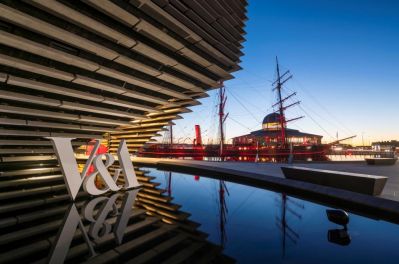 V&A design museum in Dundee © Visit Scotland / Kenny Lam
Edinburgh: UNESCO Creative City of Literature
Storytelling and the written word have been the life force of Edinburgh’s art and culture for centuries. Its contributions to the world of literature are so rich and well-recognised that, in 2004, Edinburgh became the world’s first UNESCO City of Literature. Writers as diverse as Robert Louis Stevenson, Robert Burns, JM Barrie and JK Rowling have all been inspired by the creative fabric of the city and Edinburgh boasts a 196 feet (60 metres) tall monument in honour of one of Scotland’s greatest writers, Sir Walter Scott.
Glasgow: UNESCO Creative City of Music
Glasgow is a vibrant city with a legendary music scene. From contemporary to classical, Celtic to country, music is the beating heart of this Scottish city. Glasgow is also famed for the enthusiasm and energy of its audiences, which is no surprise as it is regularly voted one of the friendliest cities in the world!
 Celtic Connections music festival in Glasgow © Visit Scotland / Kenny Lam
Perth: UNESCO Creative City of Craft and Folk Art
Perth is a small, picturesque city in the heart of Scotland, set amongst rolling hills on the banks of the River Tay. Within just a short stroll, visitors can enjoy a unique combination of cultural experiences and countryside life. Perth's rich history makes it a city of stories, of tales of medieval and Royal connections where Scotland's monarchs were crowned for centuries, of Jacobite battles and marching suffragettes.
If you or your group would like to explore Scotland’s UNESCO Trail on a tailor-made tour of the country, please do contact our friendly team today.